You already have the conviction. Now it's about execution — setting things up properly, mastering the tools, and becoming a real participant rather than a casual observer.
Most people who get this far make one of two mistakes. They either stay passive — buying Bitcoin on an exchange and leaving it there, never taking custody, never going deeper. Or they go too fast — overcomplicating a simple thesis. Bitcoin Operators do neither.
The operator mindset
Three Principles That Separate Operators from Observers
Ownership is not optional.
Holding Bitcoin on an exchange is not ownership. It is an IOU. Operators take custody of their Bitcoin because they understand the difference between holding an asset and trusting someone else to hold it for them. This is not paranoia — it is precision.
Consistency beats timing.
Operators do not try to buy the bottom or sell the top. They build a system — a regular, automatic purchasing schedule that removes emotion from the equation entirely. Over time, consistency produces better outcomes than any timing strategy.
Depth beats breadth.
The Bitcoin ecosystem is large and getting larger. Operators focus on Bitcoin specifically — not the broader crypto market. The signal-to-noise ratio in Bitcoin is dramatically higher than anywhere else in the space.
Your 3-step toolkit
Foundation. Ecosystem. System.
1
Set up self-custody from day one. A hardware wallet — typically $50-$150 — stores your Bitcoin private keys offline, completely out of reach of any exchange, hacker, or third party. Ledger and Trezor are the two most trusted options. When you set up your hardware wallet, you'll receive a seed phrase — a sequence of 12 or 24 words. Write it on paper. Store it somewhere safe and private. Do not photograph it, store it digitally, or share it with anyone. This is the foundation — not an upgrade you do later.
2
Go beyond price — learn the ecosystem. The Lightning Network is a payment layer built on top of Bitcoin that enables instant, near-free transactions of any size. Apps like Wallet of Satoshi and Phoenix Wallet make Lightning accessible to anyone. Bitcoin meetups exist in most major cities. Conferences bring together serious participants from around the world. Engaging with the community accelerates understanding in ways that solo reading cannot.
3
Stack with a system, not emotion. Dollar-cost averaging (DCA) is the practice of buying a fixed amount of Bitcoin on a regular schedule — weekly, bi-weekly, or monthly — regardless of price. It is the single most effective strategy for most people building a Bitcoin position over time. Platforms like Swan Bitcoin and River Financial are purpose-built for this. Set it up once and let it run.
You've got the roadmap
Where would you like to go from here?
Explore at your own pace — no pressure, in whatever order makes sense for you.
📚
Browse the Books
Flip through any of the four books. Read what interests you, skip what doesn't.
🤖
Talk to Coach Satoshi
Have a specific question right now? Coach meets you exactly where you are.
⚡
Get the Full Kit
All four books, Coach Satoshi, and five action guides — $37, instant access.
The Bitcoin Path Library
Click any cover to read the opening pages. The suggested book for your path is shown first — but all four are always open to you.
Suggested for your path
Read a sample
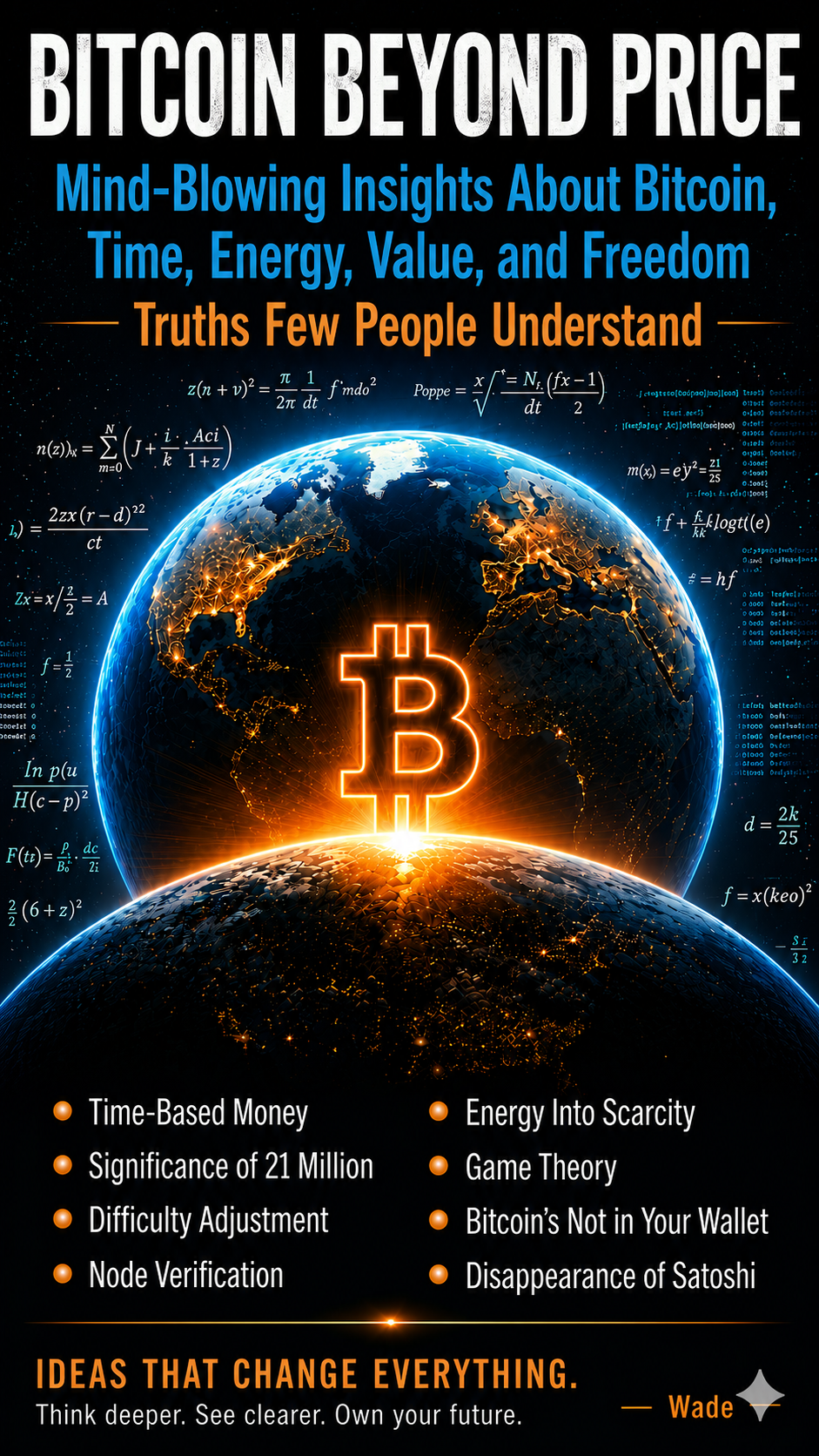
Bitcoin Beyond Price
30 deep insights most Bitcoin holders never learn — the mathematics, energy, and design.
Read a sample
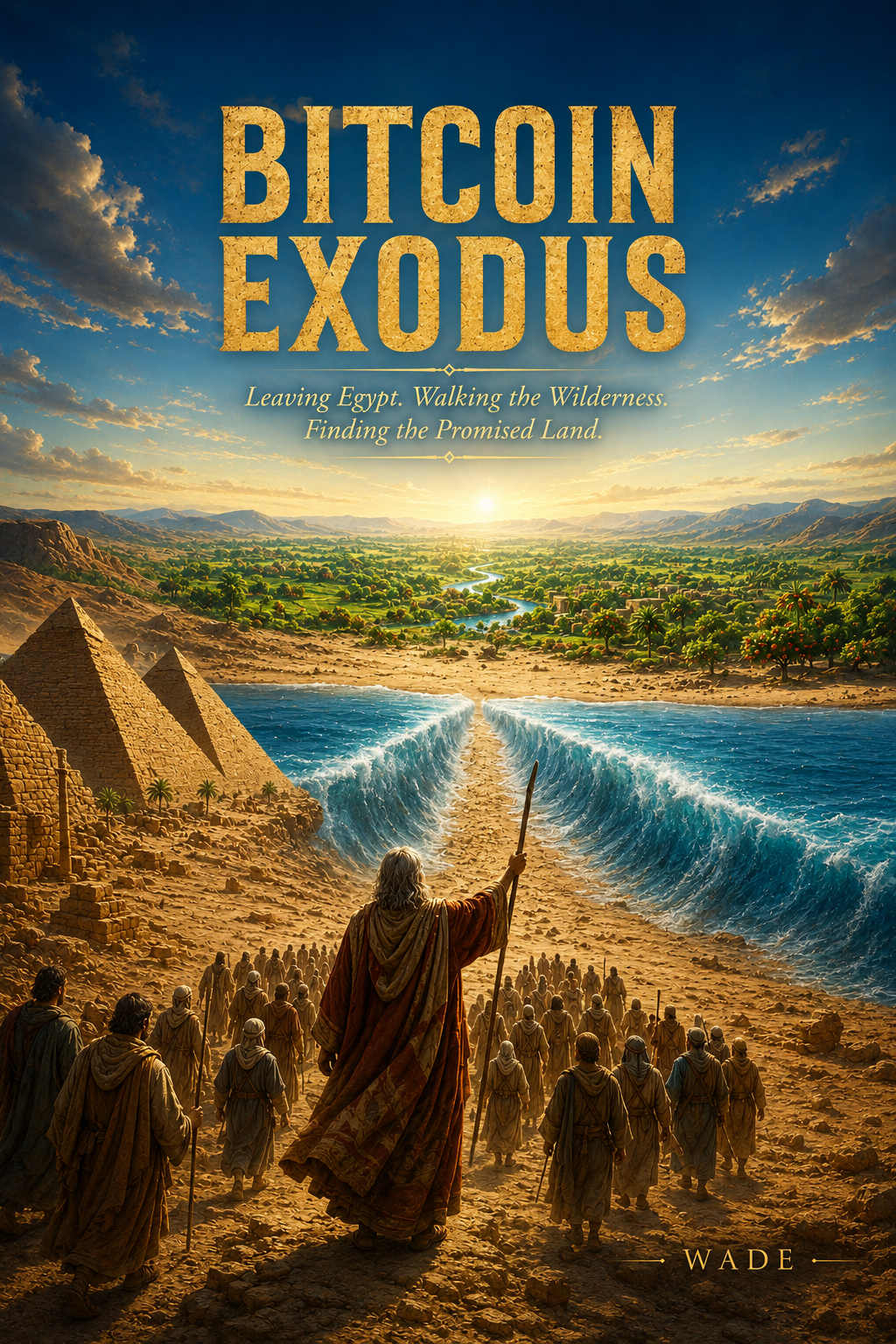
Bitcoin Exodus
The philosophical and monetary case for leaving the fiat system behind.
Read a sample
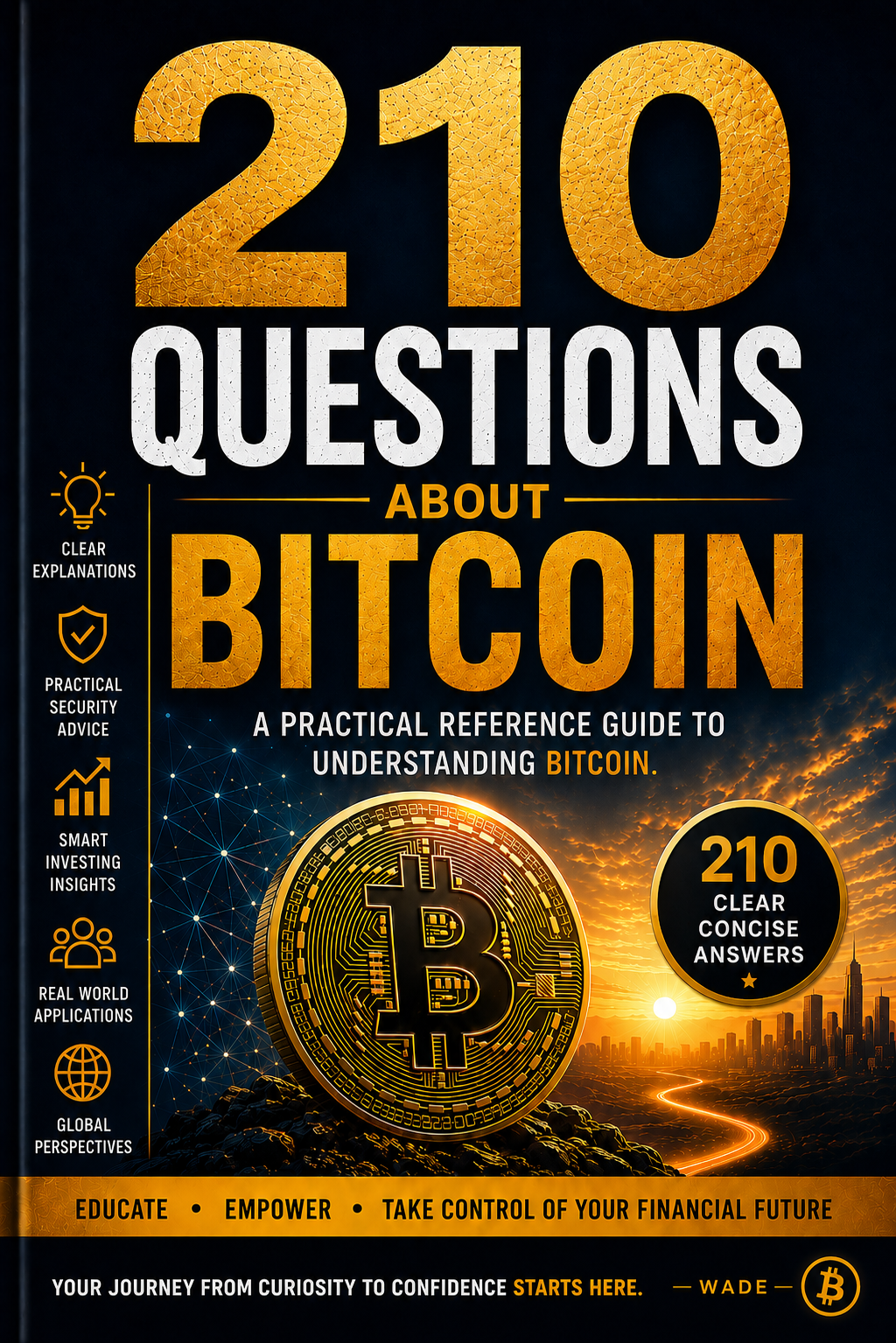
210 Questions About Bitcoin
Every question answered — from what Bitcoin is to wallets, IRAs, ETFs and beyond.
Read a sample
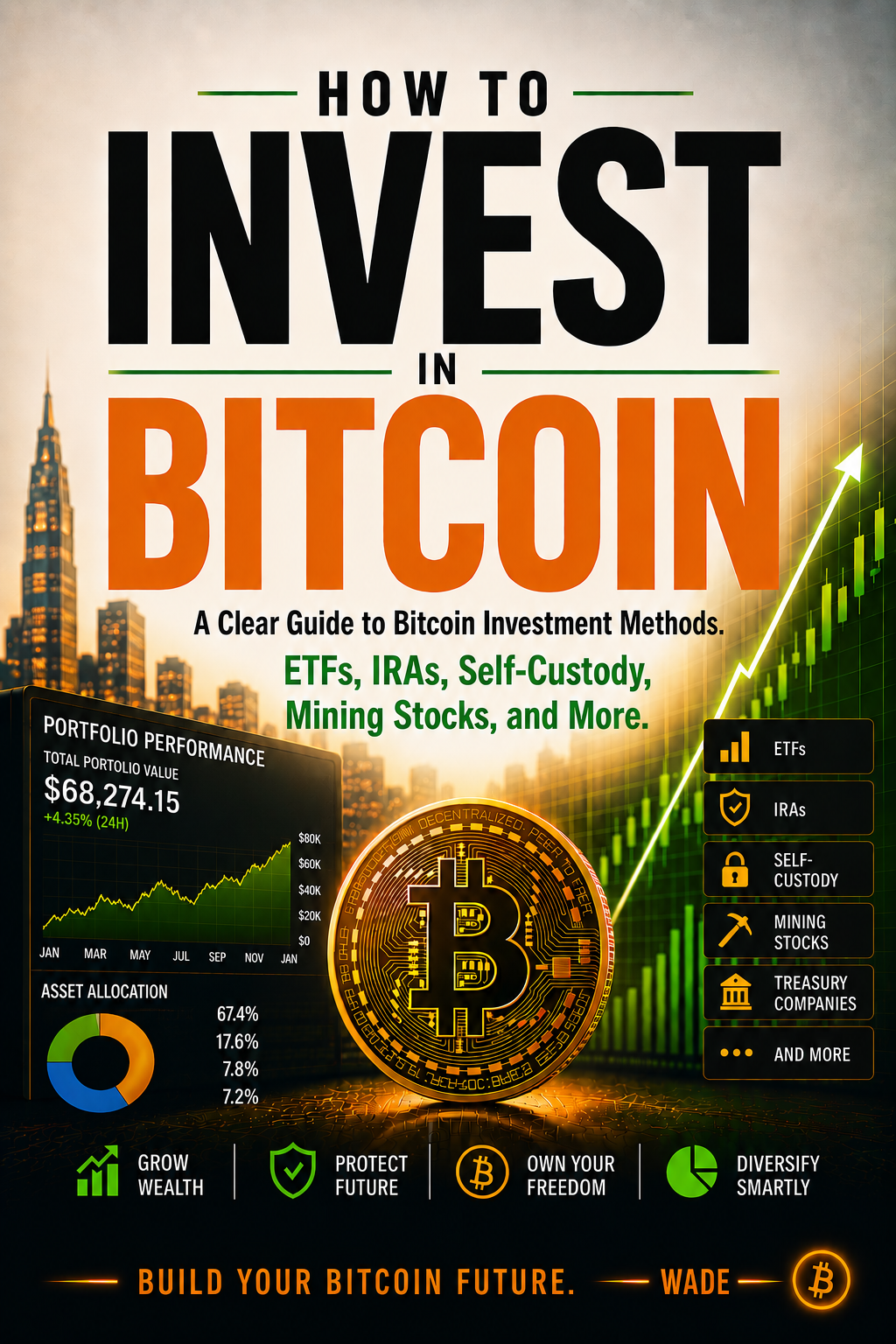
How to Invest in Bitcoin
Every investment method clearly explained — ETFs, IRAs, self-custody, mining stocks, and more.
Reading: Bitcoin Exodus
Introduction + Essay 1
You Cannot Reform Pharaoh's System — You Must Leave It
"Remember this day in which you came out from Egypt, out of the house of slavery..." — Exodus 13:3
The Exodus is one of the most powerful and enduring stories ever recorded. A people in bondage. A system designed to keep them there. A dramatic, costly escape. And — for those who persevered — a promised land that had to be built, not just received.
This book is an exploration — not a declaration of equivalence. Its purpose is to highlight a recurring pattern of liberation, explore how that pattern applies to our current moment in monetary history, and invite readers to consider what it means to leave a broken system — and what it costs to do so.
We live under a monetary system that was not designed with your interests at its center. It takes quietly, through inflation — the slow erosion of everything you save. You don't see the chains — but you feel them.
This system is not broken. It works as designed. That is precisely why it cannot be reformed from within. In Argentina, families have watched their savings evaporate through decades of currency collapse. When Canadian truckers had their bank accounts frozen during the 2022 protests, it became a wake-up call for many who had never considered that their money could be made inaccessible by institutional decree.
Bitcoin is not a protest. It is an alternative — built on mathematics rather than institutional trust. Decentralized. Fixed supply. Borderless. Permissionless. Choosing this path takes learning, patience, and discomfort. But then — the Exodus never was easy.
The question is not whether the system is broken. You already know the answer to that. The question is: will you leave?
If you'd like to read the full book, it's available in the Bitcoin Path Kit.
The kit includes:
Four full ebooks
Bitcoin Exodus
210 Questions About Bitcoin Everyone Should Ask
Bitcoin Beyond Price
How to Invest in Bitcoin
Five Show Me How Guides
Access to Coach Satoshi — personalized Bitcoin AI
Four Resource Guides (Learner, Fiat Skeptic, Operator, Investor)
Bitcoin is a decentralized digital money system that allows anyone to store and send value without a bank, government, or any intermediary.
Before Bitcoin, digital money always required a trusted middleman. Bitcoin changed that. Introduced in 2009, it allows two people anywhere in the world to exchange value directly — without permission from any third party. Only 21 million bitcoin will ever exist. This limit is enforced by the software itself and verified by thousands of independent computers worldwide. No one can create more.
Question 2
Who Created Bitcoin?
Bitcoin was created by a person or group using the name Satoshi Nakamoto, who published the Bitcoin whitepaper on October 31, 2008.
Satoshi published a nine-page document describing a system for digital payments without a trusted third party. It was posted quietly to a cryptography mailing list. Most recipients ignored it. Embedded in Bitcoin's very first block was a message: "The Times 03/Jan/2009 Chancellor on brink of second bailout for banks." A timestamp — and a statement of purpose. Satoshi disappeared in 2011. Their true identity has never been confirmed. By stepping away, Satoshi ensured no single person could be pressured to change Bitcoin's rules.
Question 9
Why Does Bitcoin Have Value?
Bitcoin has value because it is scarce, useful, globally accessible, and increasingly trusted as a store of value.
Only 21 million bitcoin will ever exist — enforced by code, verified by thousands of independent computers. No government can print more. This scarcity enforced by mathematics rather than institution is genuinely novel in the history of money. Bitcoin's value is also volatile and speculative. The honest answer includes both sides: a monetary property without precedent, and a market price that remains highly uncertain.
If you'd like to read the full book, it's available in the Bitcoin Path Kit.
The kit includes:
Four full ebooks
Bitcoin Exodus
210 Questions About Bitcoin Everyone Should Ask
Bitcoin Beyond Price
How to Invest in Bitcoin
Five Show Me How Guides
Access to Coach Satoshi — personalized Bitcoin AI
Four Resource Guides (Learner, Fiat Skeptic, Operator, Investor)
Most people think Satoshi sat down and typed MAX_SUPPLY = 21000000. That's not what happened. The 21 million limit was never written into Bitcoin as a number. It emerged from a mathematical structure Satoshi designed for a completely different purpose: the halving schedule. Every 210,000 blocks, the reward miners receive gets cut in half. Run the math on that geometric series:
Era 1: 210,000 × 50 BTC = 10,500,000 BTC Era 2: 210,000 × 25 BTC = 5,250,000 BTC Era 3: 210,000 × 12.5 BTC = 2,625,000 BTC ... Sum of infinite series: 20,999,999.9769 BTC
Not 21,000,000. Not a round number. The final satoshis can never be minted — computer arithmetic rounds down. The 21 million limit is a mathematical inevitability that fell out of a halving schedule. No price signal in the universe can produce a single additional satoshi. That has never existed before in all of human economic history.
Insight 2 — Bitcoin Invented Its Own Clock. What time is it on the Bitcoin network right now? The answer is not a timestamp. It's a block number. Bitcoin doesn't use atomic clocks. It doesn't trust any external time source — because any external source could be manipulated. The unit of time is not the second. It's the block. One block is approximately ten minutes. The halving happens every 210,000 blocks — not every four years. The difficulty adjustment happens every 2,016 blocks — not every two weeks. No one can speed up Bitcoin's issuance schedule. No one can slow it down.
Insight 3 — Bitcoin Is Mathematically Harder Than Gold. In the world of hard money, scarcity is everything. For thousands of years, gold has been the benchmark. Rare enough that you can't just make more, abundant enough to be useful, durable, divisible, globally recognized. Economists measure monetary hardness using Stock-to-Flow (SF): existing supply divided by annual new production. Higher SF = scarcer asset = harder money.
What Makes Bitcoin Different / Risk and Volatility
Bitcoin is unlike traditional money, stocks, bonds, or commodities. At its core, it is a decentralized digital monetary network — one that operates without a central bank, government, or company controlling the supply.
Fixed Supply. Bitcoin has a fixed cap of 21 million coins. Unlike fiat currencies, which can be created by central banks at will, Bitcoin's issuance schedule is written into the software itself. By approximately the year 2140, no new Bitcoin will be issued. The supply is mathematically fixed — immune to political pressure, economic crisis, or government decree.
Self-Custody. Bitcoin allows individuals to hold their own assets directly through private keys — without relying on any bank, brokerage, or custodian. Self-custody means genuine ownership. But it also means genuine responsibility. Understanding this distinction before you choose an investment method matters more than most people realize.
Chapter 2 — Risk, Volatility, and Expectations. Before investing in Bitcoin through any method: Bitcoin is volatile. It has historically experienced massive upward moves and severe drawdowns. In 2017-2018 it fell from $19,800 to $3,100 — an 84% drop. In 2021-2022 it fell from $69,000 to $15,500 — a 78% drop. These movements can be emotionally devastating, especially for newer investors.
Position Sizing. Many experienced investors limit Bitcoin to a percentage of their overall portfolio. Common guidance from financial advisors ranges from 1% to 10%, depending on risk tolerance, age, time horizon, and conviction. What most agree on: invest only what you can afford to hold through a significant drawdown without panic selling.
If you'd like to read the full book, it's available in the Bitcoin Path Kit.
The kit includes:
Four full ebooks
Bitcoin Exodus
210 Questions About Bitcoin Everyone Should Ask
Bitcoin Beyond Price
How to Invest in Bitcoin
Five Show Me How Guides
Access to Coach Satoshi — personalized Bitcoin AI
Four Resource Guides (Learner, Fiat Skeptic, Operator, Investor)
You're ready to operate. Coach Satoshi helps you build your system correctly.
The toolkit gives you the framework. Coach Satoshi works through the specifics with you — understanding your setup first, then helping you build the right system for how you actually operate. Ask anything, anytime, as much as you want.
🤖
Coach SatoshiUnderstands your path before giving advice
I want to set up a proper DCA system that goes straight to self-custody.
Good setup goal. Do you already have a hardware wallet, or is that part of what you're setting up?
I have a Trezor on the way.
Perfect timing. And are you looking to automate small regular purchases — weekly or monthly — or larger less frequent buys?
Weekly, small amounts, fully automated.
Then Swan Bitcoin is your answer. They have an automatic withdrawal feature that sends each purchase directly to your Trezor address on a schedule you set. Completely hands-off once configured. Here's how to set it up before your Trezor even arrives...
✓ Ask anything · Anytime · As many times as you want
Most people walk more than one path. Today you might be here as a Learner — next month as an Investor — eventually all four. All paths are always open. We're here whenever you're ready for the next one. Take the quiz again anytime →
Want everything in one place?
The Bitcoin Path Kit
All four books, Coach Satoshi, five step-by-step action guides, and a curated resource library. One kit, one price, instant access.